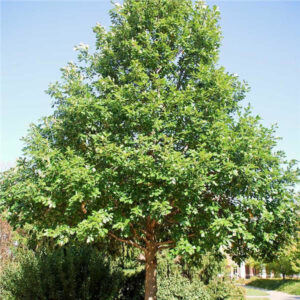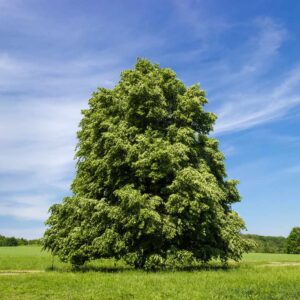
The thornless honey locust (Gleditsia triacanthos var. inermis) is a popular, fast-growing deciduous tree prized for its delicate, lacy foliage, open canopy, and adaptability to harsh urban environments. Unlike the wild native species, this variety is characterized by its smooth branches and trunk that lack sharp, formidable thorns.
🌿 Foliage and Leaf Structure
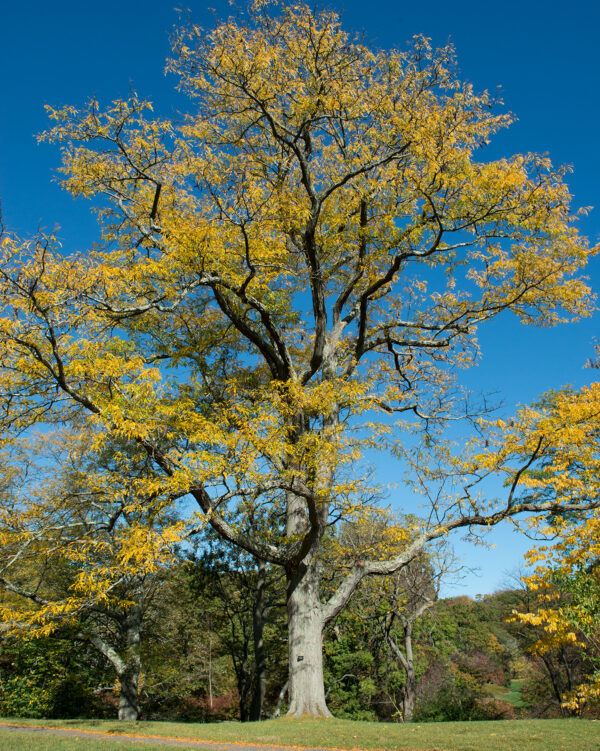
The tree features bipinnately compound leaves, meaning each leaf is divided into numerous small, oval leaflets (roughly 1/2 to 1 inch long). This fine texture creates a “dappled shade” effect, letting enough sunlight filter through to support lush lawn grass directly underneath the canopy. In the spring and summer, the leaves are a bright, rich green, transitioning to a crisp, vibrant golden-yellow in the autumn. Because the leaflets are so small, they break down quickly when they drop, requiring minimal raking.
🌳 Form and Canopy Shape
- Size: Mature trees typically stand 30 to 70 feet tall with a comparable spread.
- Shape: It features a broad, open, and spreading habit, often forming a flat-topped or vase-like silhouette as it ages.
- Bark: The young bark is smooth and grayish-brown, developing tight, dark gray, fissured plates as the tree matures.
🌸 Flowers and Seed Pods
In late spring, the tree produces clusters of small, greenish-yellow flowers. While not visually striking, they are highly fragrant and attract honeybees and pollinators. By late summer and autumn, female trees produce long, twisted, purplish-brown seed pods reaching 6 to 18 inches in length. These pods contain a sweet, leathery pulp that surrounds the seeds (giving the tree its name “honey” locust).
🌍 Growing Habits and Hardiness
Thornless honey locusts are remarkably tough plants. They have a deep, aggressive root system that makes them highly drought-tolerant and wind-resistant. They thrive in full sun, easily tolerate salt spray, alkaline soils, and compact urban dirt, making them one of the most reliable street and parking lot shade trees across USDA Hardiness Zones 3 through 9.Are you trying to identify a tree on your property, or are you considering planting a specific cultivar (like a seedless or yellow-leafed variety) for landscape shade?