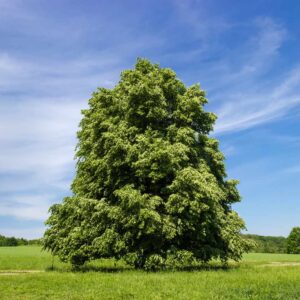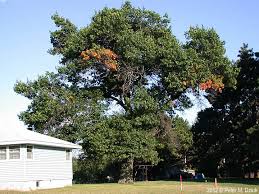
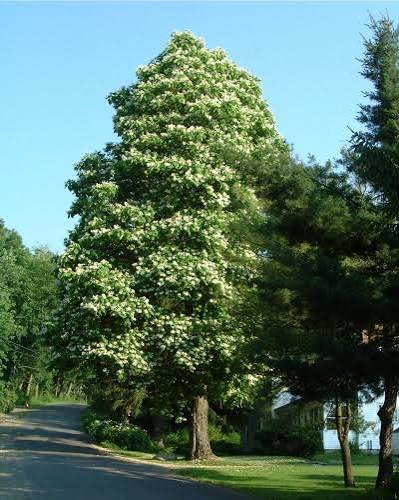
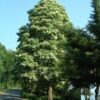
A buckeye tree (Aesculus glabra, commonly known as the Ohio buckeye) is a medium-sized deciduous tree in the soapberry family (Sapindaceae) native to North America.
Key Characteristics
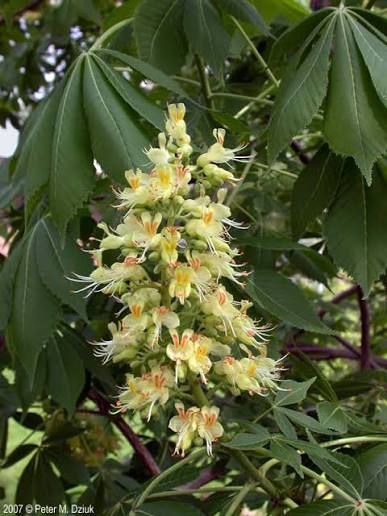
- Leaves: Palmately compound, meaning 5 to 7 leaflets radiate from a single central point (resembling the fingers of a hand).
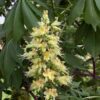
- Flowers: Showy, greenish-yellow to yellow-green flowers bloom in upright clusters during the spring.
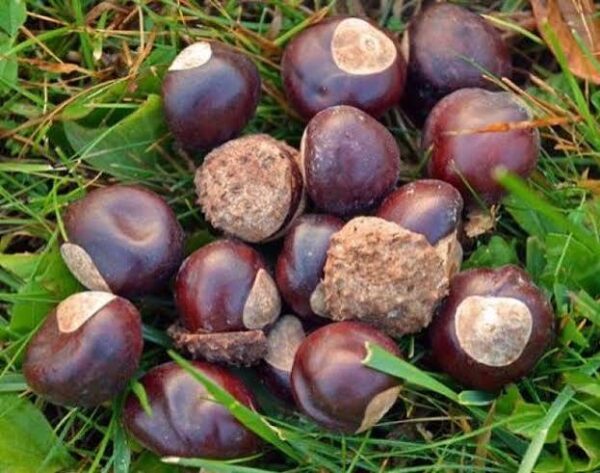
- Nuts and Husks: In the fall, the tree produces leathery, spiny round husks that split open to reveal smooth, glossy dark-brown seeds. Each seed features a light-colored tan spot that makes it look like the eye of a male deer (a “buck”), which is how the tree got its name.
- Odor: All parts of the tree—including the leaves, bark, and twigs—emit an unpleasant, fetid odor when crushed or bruised.
Uses and Toxicity
- Toxic Properties: All parts of the buckeye tree, especially the seeds and leaves, contain toxins like aesculin and tannic acid, making them poisonous to humans and most livestock if eaten.
- Wood: The wood is lightweight and soft, historically used to carve items like artificial limbs, boxes, and caskets.
- Cultural Significance: The tree is the official state tree of Ohio, and carrying a buckeye nut is a long-standing tradition believed to bring good luck. It also inspired the popular peanut butter-and-chocolate confection known as a buckeye candy.