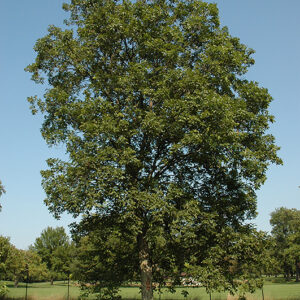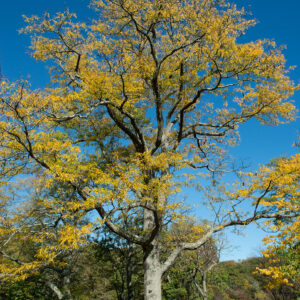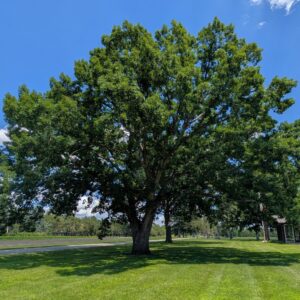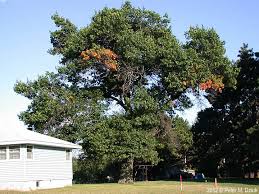
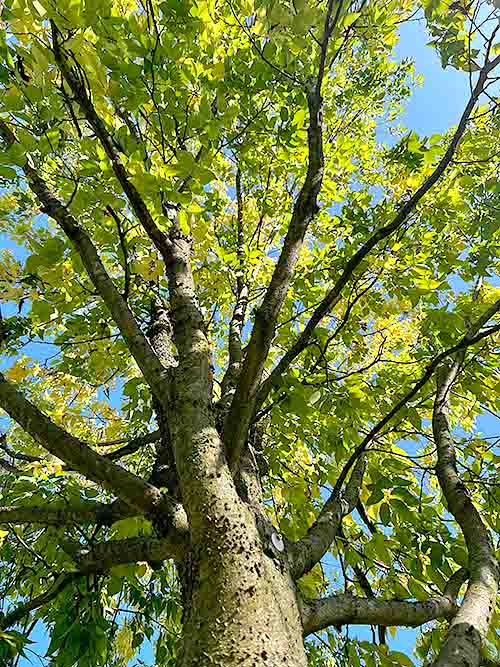
The common hackberry (Celtis occidentalis) is a tough, medium-to-large deciduous shade tree known for its distinctive corky, wart-covered bark and high adaptability to harsh environments.
distinctive corky, wart-covered bark and high adaptability to harsh urban settings.
Key Physical Characteristics
- Height and Spread: Grows 40 to 60 feet (sometimes up to 80–100 feet in ideal conditions) with an equal or slightly narrower spread and an upright, vase-shaped or rounded crown.
- Bark: Features a unique grayish-brown color covered in prominent, raised corky ridges and wart-like bumps.
- Leaves: Simple, oval-to-lanceolate leaves with sharply toothed edges, pointed tips, and a noticeably uneven (asymmetric) base with three prominent veins. They are medium green in summer and turn dull yellow in fall.
- Fruit: Produces small, berry-like drupes (1/4 to 1/3 inch wide) that start red and ripen to dark purple/black in autumn, often hanging on the branches through winter to feed birds.
Growth and Environment
- Hardiness: Extremely hardy (USDA Zones 2–9), tolerating severe wind, drought, pollution, and street salt.
- Growth Rate: Moderate to fast, adding 12 to 24 inches of growth per year.
- Wildlife Value: Highly rated for wildlife; the fruit attracts cedar waxwings, robins, and mockingbirds, while the foliage serves as a larval host for butterflies like the hackberry emperor.